Oslo
The ramparts, the opera roof and Vigelandsparken — three routes for two, four and six hours, and the walk back from every stop.
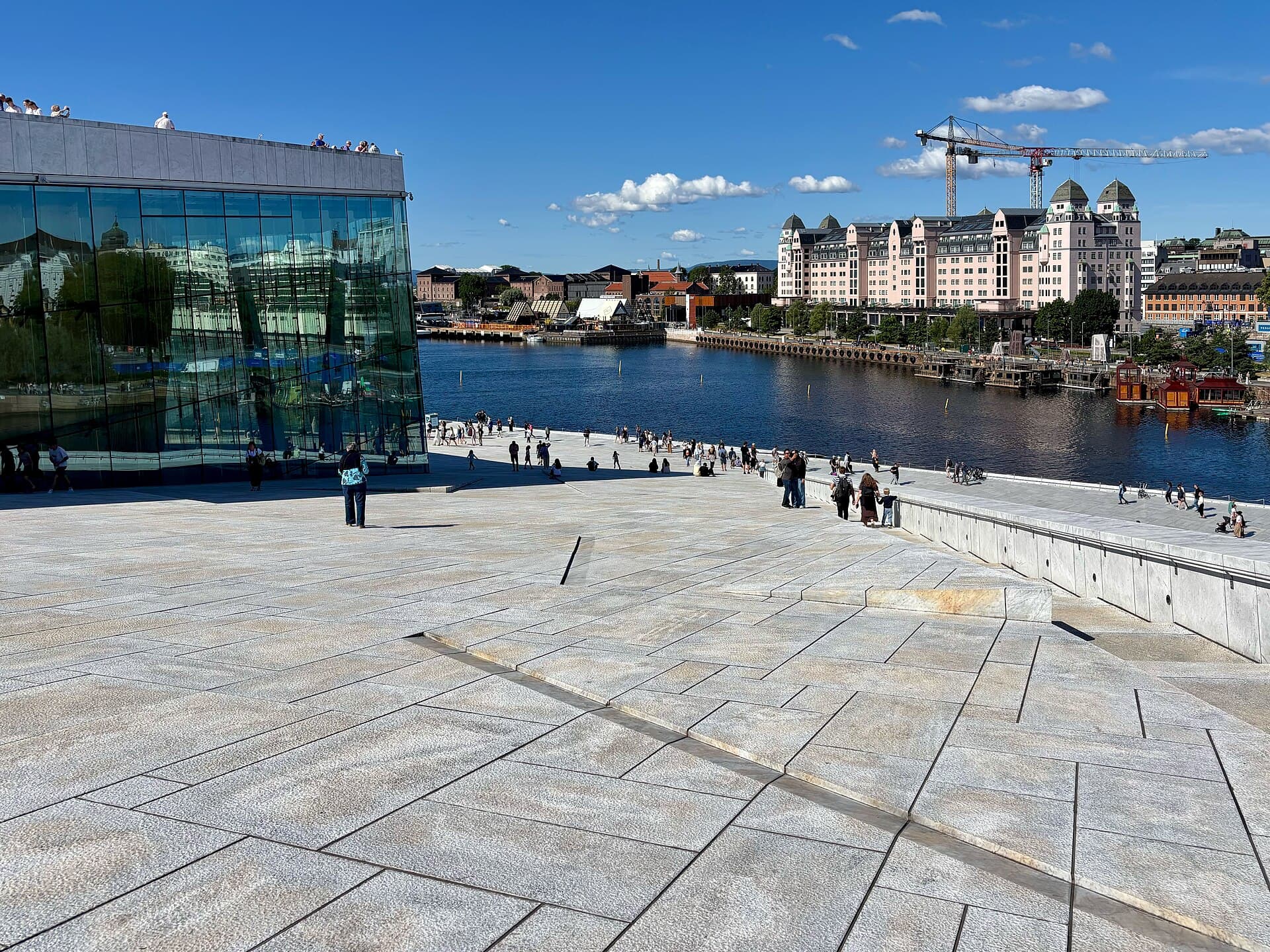
Oslo rebuilt its waterfront over twenty years, and the result is a capital you can cross end to end on foot along the water. The fortress, the opera house, the new museums and the old main street are all within half an hour of each other, and the city thins out fast once you turn inland up the Akerselva. It is the one Norwegian port where the problem is not filling the day but choosing what to leave out.
Going ashore
Most ships tie up at Akershusstranda, directly below the fortress walls, or at Revierkaia a few hundred metres east; the largest use Filipstad, 2.5 km west. From Akershusstranda the fortress gate is six minutes up the cobbled ramp and the City Hall square twelve along the water. From Filipstad it is a 30-minute walk along the water to the City Hall or a shuttle of about ten minutes, charged by your ship — take 40 minutes off your day. Since this guide went to press King Harald V has died, on 28 August 2026, and Akershus Castle, its chapel and the mausoleum are closed to all visitors until further notice, with no reopening date published. The fortress grounds around them stay free and open, and no route in this guide goes inside the castle, so none of them changes.
The walks
- 01
The fortress and the main street
4.3 km · 2 hours · 40 m upA loop that starts on the wall above your own ship and ends in the oldest streets in the city. Everything on it is outdoors, free and open whatever the day, which makes it the route for a short call, a Sunday, or a morning before the museums open. Pavement and cobbles, with one cobbled ramp up into the fortress that is gritted in winter and ice on the ramp itself. Seven stops, nothing to pay.
- 02
Both waterfronts, four hundred years apart
6.4 km · 4 hours · 55 m upRoute A, then east into Bjørvika — the container port that became a district of glass in twenty years. You walk from a 1624 street grid onto the roof of an opera house in eleven minutes, which is the most Oslo thing in this guide. One ticket, one museum, no queues before 11:00. Eleven stops, kr 200 for the museum, and sloping marble at stop 8 that is slippery wet and closed in ice.
- 03
The city and the sculpture park
7.6 km · 6 hours · 95 m upRoute B until midday, then the tram: up to the palace, out to Vigelandsparken — two hundred figures in a park with no gate and no closing time — and back to the quay along the water. Three short rides do what would otherwise cost two hours of walking, and the 7.6 km is the walking alone. Fourteen stops, kr 200 and three tram fares; one ticket covers an hour.
What's inside
Look inside
Pages 1–6 are in the free sample. 38 pages in the full guide.
What the guide covers
- Akershus festning
- Akershus slott
- Oslo rådhus
- Aker brygge
- Tjuvholmen
- Astrup Fearnley Museet
- Nasjonalmuseet
- Nationaltheatret
- Karl Johans gate
- Stortinget
- Oslo domkirke
- Kvadraturen
- Christiania torv
- Operahuset
- Deichman Bjørvika
- Munchmuseet
- Barcode
- Det kongelige slott
- Slottsparken
- Vigelandsparken
- Frognerparken
3 routes · 36 numbered stops · 38 pages
When to go
June is the best month here, warm and light until 22:30; May is green by the middle and has few ships, and September is the quietest good month, with clear light and cold evenings. July can be genuinely hot, 25 °C and up, with no shade on the opera roof, Rådhusplassen or the park axis — carry water and start early; August brings warm water, heavy showers and busy museums. From November to February it is dark by 16:00 and light after 09:00, with ice underfoot: the centre is lit and the routes still work, but Vigelandsparken in the dark is not worth the tram, so do route B and add an interior. On 17 May, Constitution Day, the whole city is on Karl Johans gate and nothing else in the guide will work. Akershus Castle has been closed since King Harald V died on 28 August 2026, with no reopening date published; the routes only ever use the grounds.