Haugesund
Harald Fairhair's monument, the herring town on the Smedasundet, and the fishermen's island across the sound.
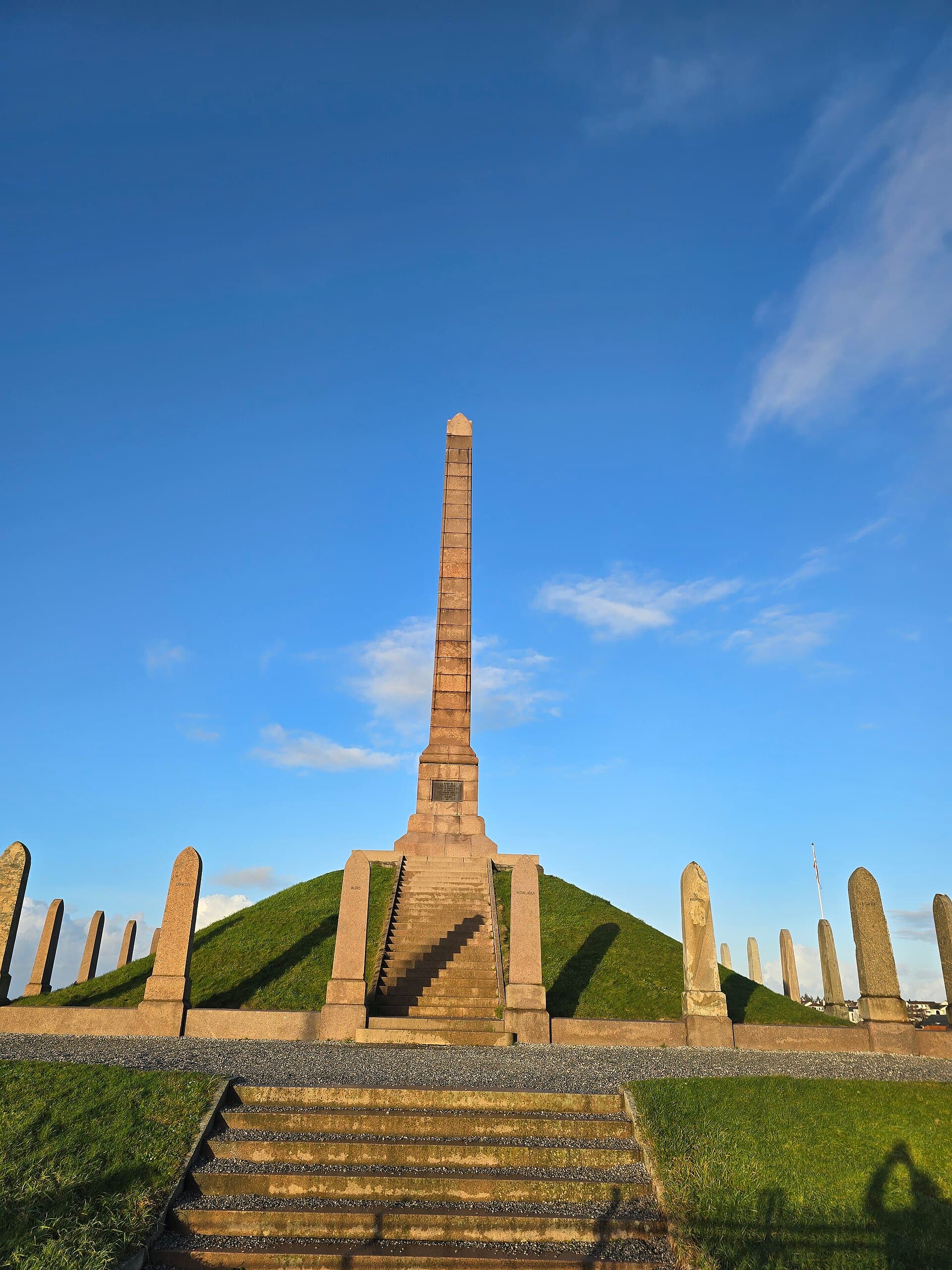
Haugesund calls itself the birthplace of Norway and has a better claim to it than most towns making that kind of noise: Harald Fairhair, who first held the country as one kingdom, had his seat across the water at Avaldsnes and died there around 933. Tradition puts his grave on the shore just north of the modern centre, and a 17-metre obelisk has stood on the spot since 1872 — though no excavation has ever confirmed the grave, and this guide says so where it stands. The town itself is younger and plainer than that history suggests: a herring port that grew rich in the nineteenth century and built itself one long street and a pink town hall. It is compact, flat, and the two things worth a whole morning are both a short walk or a short bus from the ship.
Going ashore
Ships tie up along the Smedasundet, the strait that runs through the middle of town, so the gangway lands you on the main quay with the pedestrian street one block inland. Haraldshaugen is a half-hour walk north along the shore and needs nothing but shoes. Karmøy — Avaldsnes and Skudeneshavn — is the bus, and this is the one Norwegian port in the catalogue where the fares are fully published: Kolumbus prints them, and they are in the stop list rather than left as a guess.
The walks
- 01
The herring town
3.8 km · 2 hours · 30 m upTorget, the pedestrian street, the 1931 town hall in pink stone and its park, the two churches, and back along Strandgata and the waterfront to the ship. Eight stops, no ticket, all within ten minutes of the gangway. Choose this under three hours ashore, or for a first look before route C.
- 02
North to Haraldshaugen
7 km · 4 hours · 60 m upThe town centre, then the long straight walk north along the sound past Skåre church to the monument on the headland where Harald Fairhair is said to be buried, and the bus back. Six stops. The default for a five-hour call. The reason Haugesund is on the itinerary at all.
- 03
Risøy and Hasseløy
5.5 km · 3 hours · 40 m upOver the Risøy bridge to the island with the shipyard and the marine college, back across and out onto Hasseløy, the old fishermen's island of small wooden houses, and home along the Smedasundet waterfront. Six stops. For a second visit, or with A on a long call. The best photographs of the town are from the other side of the water.
What's inside
Look inside
Pages 1–6 are in the free sample. 38 pages in the full guide.
What the guide covers
- Smedasundet
- Torget
- Haraldsgata
- Haugesund rådhus
- Vår Frelsers kirke
- Skåre kirke
- Strandgata
- Haraldshaugen
- Krosshaugen
- Risøybrua
- Hasseløy
- Avaldsnes
- Avaldsnes kirke
- Jomfru Marias synål
- Nordvegen Historiesenter
- Skudeneshavn
3 routes · 30 numbered stops · 38 pages
When to go
This is the exposed west coast and the wind matters more than the temperature: it rains one day in three and blows most days, the monument headland and Hasseløy's north end are open to the west, and on a wet or wild day the guide sends you to Haraldshaugen by bus both ways rather than on foot. Nordvegen is open daily from late April to mid-September and Wednesdays and Sundays only outside that, and the Viking farm runs just 15 June to 13 August — the same weeks the adult ticket costs kr 190 rather than kr 140. The film festival takes over the town in the third week of August, which is worth arriving into and impossible to book a table during.